The Enduring Frame: How Photographers Choose Legacy Over the Algorithm
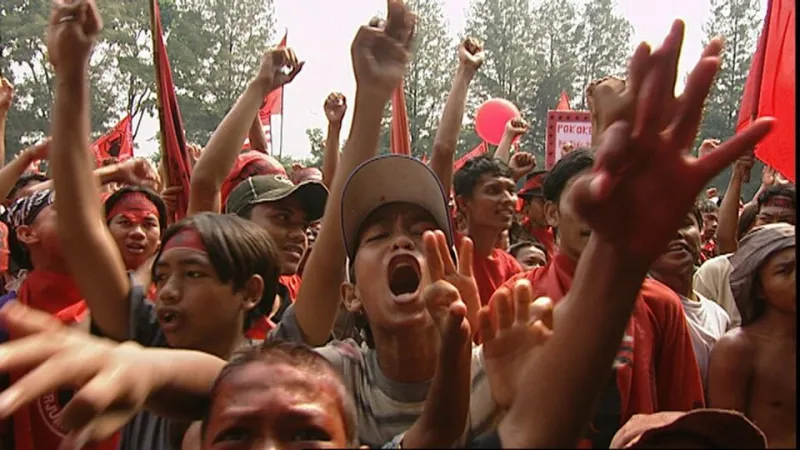
Photo: Christian Frei Switzerland, CC BY-SA 2.0, via Wikimedia Commons
There is a photograph that circulates occasionally in photography education circles — a street scene from New York in the 1970s, shot on film, its grain and shadow so precisely balanced that it looks as though it was composed yesterday. Nobody knows what camera was used. Nobody cares. What they know is that the image carries something — a quality of attention, a stillness inside the motion — that no filter can manufacture and no trending aesthetic can replicate.
That photograph, and the conversation it provokes, sits at the center of a tension that defines contemporary photography more than perhaps any other: the pull between what performs now and what endures.
The Aesthetic Treadmill
The photography industry has never been immune to trend cycles. Sepia tones, high-contrast black-and-white conversions, the HDR phase of the early 2010s — each era has produced its dominant aesthetic, and each has eventually receded, leaving behind work that looks unmistakably dated to anyone who lived through it.
What has changed is the velocity. Social media platforms, and Instagram in particular, have compressed the trend cycle from years into months. An editing style that feels fresh in January can read as oversaturated or algorithmically generic by the following fall. Photographers who built their followings on a particular look find themselves in the uncomfortable position of having to either evolve rapidly or watch engagement decline.
The pressure is not imaginary. For photographers who depend on visibility to attract clients — and in the US market, that is the overwhelming majority of working professionals — the algorithmic imperative is a genuine economic force. Platforms reward content that conforms to current aesthetic preferences. The incentive to adapt is real and immediate.
But adaptation has a cost.
What Gets Lost in the Chase
Portland-based photographer and educator Claire Sato has watched several talented colleagues remake their visual identities multiple times over the past decade in response to platform pressures. Some have grown their audiences substantially. Few, she argues, have grown their work.
"There's a difference between evolving and reacting," she says. "Evolution comes from inside the work — from asking harder questions, from seeing more clearly, from developing a relationship with your subject matter that deepens over time. Reacting comes from outside. It comes from watching what other people are getting likes for and trying to replicate it."
The distinction matters because visual style, when it is genuinely developed rather than borrowed, carries information about the photographer's perspective that cannot be replicated by anyone else. It becomes, in the truest sense, a signature — a recognizable way of seeing that persists across subjects, locations, and projects.
That kind of signature takes years to develop. It also requires a degree of resistance to external validation that runs counter to the psychological architecture of social media engagement.
The Photographers Choosing the Long Game
Not everyone is surrendering to the algorithm. Across genres and markets, a growing cohort of photographers is making intentional, sometimes economically costly choices to prioritize work that reflects a genuine and sustained creative vision over work that is optimized for current platform preferences.
Wedding photographer James Okafor, based in Chicago, made the decision three years ago to stop submitting his work to the major wedding industry publication platforms that had previously driven a significant portion of his inquiries. His reasoning was precise: the editorial preferences of those platforms were beginning to shape his shooting decisions in ways he found creatively dishonest.
"I was starting to think about which moments would look good in a submission before I thought about which moments were actually meaningful," he says. "That's a corruption of the work. Once you start editing for the curator instead of for the story, you've lost something that's very hard to get back."
Okafor replaced that referral channel with a more direct client relationship strategy — personal referrals, portfolio reviews with prospective clients, and a website that prioritizes storytelling over visual spectacle. His booking volume declined initially. His client satisfaction metrics, and his own creative fulfillment, rose substantially.
Style as Commitment
The photographers who navigate this tension most successfully tend to share a particular relationship with their own aesthetic choices. They understand their style not as a product — something to be marketed and adjusted in response to demand — but as a commitment. A set of values about light, color, composition, and human connection that they have arrived at through sustained practice and are prepared to defend.
That commitment is not rigidity. The finest photographers continue to grow, to be surprised, to encounter subjects that challenge their established ways of seeing. But the growth happens in relation to a stable center — a visual identity that is recognizably theirs regardless of what the trending presets happen to be in a given season.
Building that center requires something that the attention economy does not easily support: patience. The willingness to develop a body of work across years rather than to optimize each individual image for immediate response. The confidence to post work that may not perform well by platform metrics because it is true to a vision that has not yet found its full audience.
What Timelessness Actually Means
It is worth being precise about what photographers mean when they invoke timelessness — a word that can slide easily into nostalgia or pretension if handled carelessly.
Timelessness in photography is not about avoiding the contemporary. It is not about shooting film when digital serves the work better, or rejecting post-processing because it was not available to earlier generations. It is about ensuring that the formal and emotional choices embedded in an image are rooted in something more durable than current aesthetic fashion.
The photographs that endure tend to be the ones in which the technical execution serves a genuine human truth — an expression captured at the precise moment of its fullest intensity, a landscape that reveals something about solitude or scale or the passage of time, a portrait that closes the distance between subject and viewer in a way that feels almost uncomfortably intimate.
Those qualities do not require any particular camera, any particular editing style, or any particular posting schedule. They require attention, intention, and the courage to prioritize the work over its reception.
The Market Is Not the Measure
The photographers who build careers of genuine distinction are rarely those who understood the market best. They are the ones who understood themselves — their visual instincts, their areas of deepest curiosity, the subjects and conditions and qualities of light that consistently pull the most honest work from them.
The market, eventually, tends to find those photographers. Audiences, even algorithmically mediated ones, respond to authenticity with a recognition that transcends trend cycles. The work that was made with integrity continues to attract the clients and collaborators who value integrity.
That is not a guarantee. The photography industry is not a meritocracy, and platform dynamics do not always reward patience. But for the photographers who are building for the long arc — for the body of work that will still be worth looking at in twenty years — the algorithm is not the measure.
The frame is.