When Two Visions Meet the Lens: Navigating Creative Conflict Between Photographer and Client
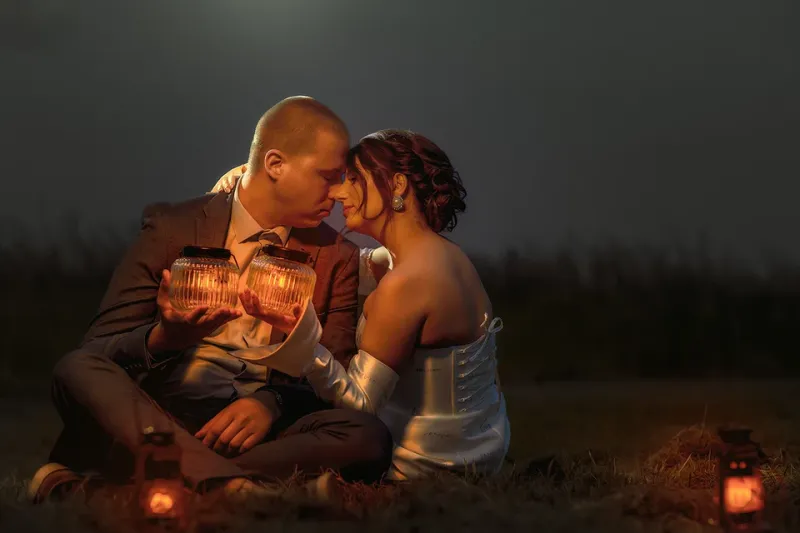
Photo: Fotografkrusevac, CC BY-SA 4.0, via Wikimedia Commons
There is a particular kind of silence that falls in the moments after a client reviews a finished gallery. It is the silence of someone measuring what they imagined against what they are now looking at. Sometimes that silence breaks into genuine delight. Other times, it fractures into something more complicated — a polite hesitation, a carefully worded email, or the unmistakable phrase: "It's not quite what I had in mind."
For working photographers, that phrase represents one of the profession's most persistent challenges. The gap between a client's internal vision and the image a camera ultimately produces is not always a failure of skill. More often, it is a failure of translation — and learning to close that gap is as essential as mastering exposure or understanding light.
The Fundamental Problem: Two Imaginations, One Frame
Clients arrive at a photography engagement carrying a mental image built from reference photographs, emotional associations, and aspirational ideas about how they want to appear or be perceived. That image lives entirely in their minds, rendered in the soft focus of imagination rather than the unforgiving clarity of a lens.
Photographers, meanwhile, arrive with trained eyes calibrated to the actual environment — the quality of available light, the spatial limitations of a location, the way a particular lens compresses or expands depth. These two perspectives are not inherently incompatible, but they speak different languages. When neither party takes deliberate steps to translate, the result is predictable: a finished product that satisfies neither the client's imagination nor the photographer's artistic standards.
Consider a common scenario in portrait photography. A bride arrives at a pre-wedding consultation having spent months collecting images from photographers working in vastly different markets, seasons, and lighting conditions. She has assembled a mood board that includes golden-hour images shot in open fields, dramatic low-key studio portraits, and airy, window-lit editorial work. Each image represents a different set of technical and environmental conditions. Her expectation, understandably, is that a skilled photographer can produce all of these things — ideally at her venue, on her wedding day, regardless of weather or schedule.
This is not an unreasonable expectation from her perspective. It is, however, a logistical and creative puzzle that requires direct, honest conversation before a single shutter is pressed.
Building the Translation Framework Before the Shoot
The most effective photographers treat the pre-shoot consultation not as a formality, but as the most important creative session of the entire project. The goal of that conversation is not simply to confirm logistics. It is to surface the emotional intent behind the visual references a client provides.
Asking a client why they are drawn to a particular image often reveals more than asking what they like about it. A client who responds to a moody, desaturated portrait may not actually want desaturated tones — they may want to feel powerful, serious, or authoritative. That emotional target can be achieved through posing, framing, and expression even if the final images are delivered in warm, natural tones that better suit the environment.
Several practical techniques help structure this conversation:
The Priority Stack. Ask clients to rank their visual references in order of importance. This exercise quickly distinguishes between images they genuinely need and images they simply admire. It also surfaces potential conflicts within the client's own mood board before they become conflicts between client and photographer.
The Constraint Disclosure. Transparently communicating what is and is not achievable within the agreed parameters — time, location, budget, season — is not a sign of limitation. It is a demonstration of professional expertise. Clients respond well to a photographer who says, "I want to be honest with you about what the light will be doing at that location at that time of day, and here is how we can work with it."
The Visual Vocabulary Check. Terms like "natural," "editorial," "moody," and "timeless" mean different things to different people. Confirming shared definitions early prevents significant misalignment at delivery.
When Creative Visions Genuinely Conflict
Occasionally, the gap between a photographer's artistic sensibility and a client's expectations is not a communication problem — it is a genuine philosophical difference. A documentary-style photographer hired by a client who wants heavily stylized, composite imagery is not facing a translation challenge. They are facing a fundamental mismatch of creative approach.
In these situations, the most professional response is also the most honest one. Redirecting a client toward a photographer whose aesthetic more naturally aligns with their vision is not a failure. It is an act of respect — for the client's investment, for the photographer's integrity, and for the work itself.
For conflicts that are less fundamental and more situational, a negotiation framework built on mutual respect tends to yield the best outcomes. Acknowledge the client's vision explicitly before offering an alternative approach. Demonstrate — through test shots, reference images, or in-the-moment previews — rather than simply describing. And resist the instinct to defend creative decisions in abstract terms. Clients respond far better to visible evidence than to theoretical explanations.
Protecting Artistic Integrity Without Losing the Client
The question of how much creative compromise is appropriate is one that every professional photographer must answer for themselves. There is no universal threshold. What matters is that the threshold is established clearly — internally, and ideally in the project agreement — before the shoot begins.
Many experienced photographers build what might be described as a "creative non-negotiable" clause into their client relationships. These are the elements of their work — a particular approach to light, a commitment to authentic expression over posed artificiality, a refusal to apply certain post-processing treatments — that remain constant regardless of client preference. Communicating these non-negotiables early, framed as a feature of the photographer's distinct style rather than a restriction on the client's wishes, tends to attract clients who value the work rather than those who simply want a service provider to execute their own vision.
The photographers who navigate this balance most successfully are those who have internalized a simple truth: the best client relationships are not transactions. They are collaborations. And like all genuine collaborations, they require both parties to arrive with open hands — the client willing to trust the photographer's expertise, and the photographer willing to honor the emotional stakes the client has placed in the work.
The Delivery Conversation
Even when the shoot itself goes well, the delivery of a final gallery requires its own form of intentional communication. Presenting images with context — a brief note about the creative choices made, the light conditions encountered, the moments that shaped the final edit — invites the client into the photographic process rather than simply presenting them with an outcome.
This practice does not guarantee universal approval. But it consistently elevates the client's understanding of what they are looking at, and that understanding is the foundation of genuine appreciation.
The lens captures what is in front of it. What determines whether that capture becomes something meaningful — for the client, for the photographer, and for the work itself — is everything that happens in the conversations before and after the shutter opens.