Know Your Zip Code: The Photographers Turning Hometowns Into Lifelong Subjects
There is a particular kind of photograph that has come to dominate American visual culture: the wide shot of an Icelandic beach, the misty Blue Ridge overlook, the neon-soaked alley in Tokyo. It is beautiful work, and much of it is interchangeable. The same locations, the same light, the same compositions repeated across thousands of portfolios.
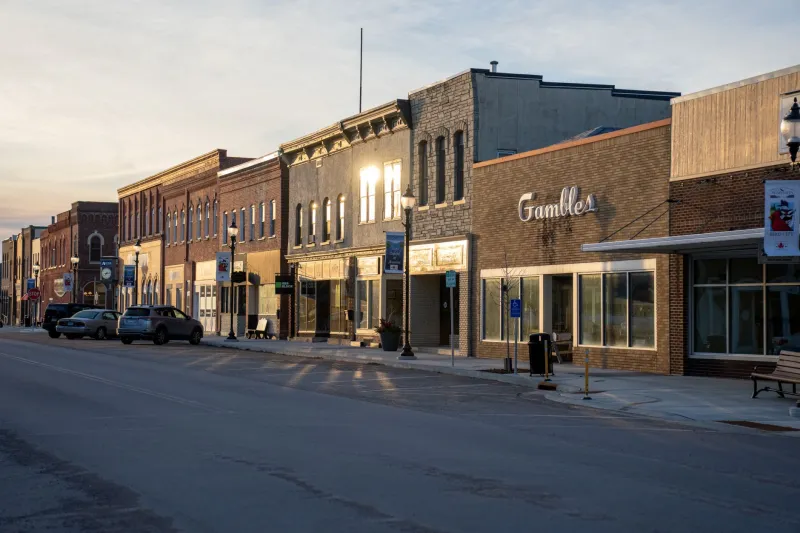
Against this backdrop, a quieter movement is gathering strength. Photographers across the United States are trading the departure gate for their own driveway, committing to document the places they have lived for years — sometimes their entire lives. Their subjects are not exotic. They are county fairs, volunteer fire department pancake breakfasts, high school Friday nights, and the slow transformation of a Main Street through a decade of economic weather. What they lack in novelty, they make up for in something travel photography rarely achieves: depth.
Familiarity as a Creative Instrument
The conventional wisdom holds that photographers should seek the unfamiliar — that fresh eyes produce fresh images. But familiarity, deployed deliberately, is its own creative instrument. A photographer who has walked the same block for fifteen years notices what a visitor never could: the shuttered diner that changes hands three times, the oak tree that comes down after a storm, the teenager who becomes the owner of the hardware store.
This is the essential argument of hyperlocal work. Access is not just about permission; it is about time. A visiting photographer can spend a weekend in a small Ohio town. A resident can spend twenty years. The resulting images are not snapshots of a place — they are a longitudinal study of it, and viewers can feel the difference even if they cannot name it.
There are practical advantages as well. Local photographers know when the light hits the water tower. They know which families will welcome a camera at the Fourth of July parade and which will close the door. They are trusted before they ever raise a lens, and trust is the one piece of equipment that cannot be purchased.
The New Documentarians of Ordinary America
Look closely at the work gaining attention in editorial circles and gallery submissions, and a pattern emerges. Photographers are producing multi-year studies of single subjects: the last independently owned movie theater in a Kansas county, the rhythms of a Maine fishing pier, the church suppers and funeral receptions that structure life in a Louisiana parish.
These projects share a sensibility. They are patient. They resist the single dramatic image in favor of the accumulated one — forty photographs of the same barbershop that, together, say something no single frame could. In an era when a drone can deliver a spectacular establishing shot in an afternoon, this kind of sustained attention has become genuinely scarce. And scarcity, in creative work, is a form of value.
The subjects themselves matter to a national audience precisely because they are common. Main Streets, county fairs, and neighborhood rituals are shared American grammar. A viewer in Seattle can look at a photograph of a Iowa grange hall and recognize something of their own history in it. Hyperlocal work, paradoxically, travels further than travel work.
A Portfolio That Cannot Be Replicated
For working photographers, the case for hometown projects is also a commercial one. Stock imagery and AI-generated landscapes have eroded the market for generic beauty. What cannot be generated, and cannot be copied, is a body of work built on twenty years of relationships in a specific place.
Editors, art buyers, and collectors increasingly recognize this. A photographer who can present a completed, decade-long study of their own community brings something to the table that no amount of technical skill alone can supply: authority. The work carries provenance. It could only have been made by one person, in one place, over real time.
This does not mean destination work is obsolete, or that every photographer should abandon ambition for the parish limits. It means the definition of a serious portfolio is widening. The discipline once reserved for far-flung assignments — commitment, repetition, deep seeing — is being applied to the mailbox at the end of the street.
The Long Game of Staying Put
Perhaps the most compelling thing about this movement is what it asks of the photographer: patience. There is no quick portfolio refresh in a decade-long hometown study. Progress is measured in seasons, not shoots. But the photographers who commit describe a shift in their own attention — the sense that they finally began seeing their surroundings only after deciding those surroundings were worth seeing.
That may be the movement's real lesson. The extraordinary photograph was never hiding in a distant location. It was waiting, all along, in the place the photographer stopped looking. The best American photography of the coming decade may well be made by people who never had to leave home to find it.