Silver and Grain: The Deliberate Rebellion of Shooting Film in the Age of Infinite Pixels
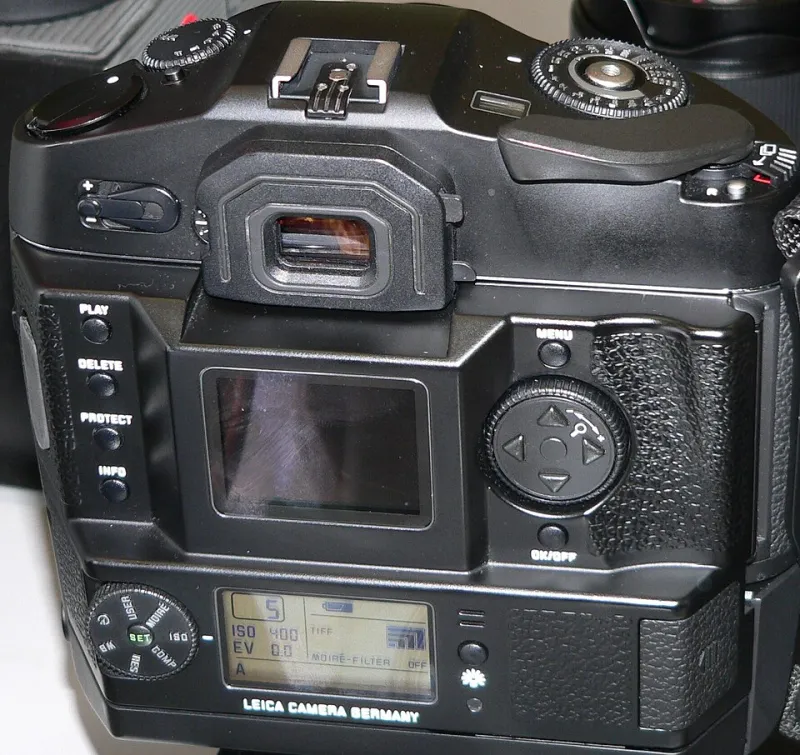
Photo: Rama, CC BY-SA 2.0 fr, via Wikimedia Commons
There is something almost counterintuitive about reaching for a film camera in 2025. The act carries with it a deliberate inconvenience — the finite roll, the uncertain exposure, the days or weeks between pressing the shutter and seeing the result. In an industry defined by speed, volume, and the perpetual refinement of digital tools, choosing film is, in the most literal sense, choosing less.
And yet, across photography studios, fine art galleries, and editorial markets from Brooklyn to Los Angeles, that choice is being made with increasing frequency and conviction. The resurgence of analog photography is not nostalgia dressed up as aesthetic preference. It is something more substantive — a reckoning with what has been quietly lost in the transition to digital, and a deliberate effort to recover it.
What Digital Abundance Actually Costs
The case for digital photography is overwhelming on its face. Modern mirrorless systems offer resolution that would have seemed implausible a decade ago, autofocus capabilities that border on prescient, and the ability to review, adjust, and reshoot within seconds. The marginal cost of an additional frame is effectively zero. Mistakes are recoverable. Experiments are cheap.
These are genuine advantages, and dismissing them would be intellectually dishonest. But abundance carries its own hidden costs, and photographers who have spent serious time on both sides of the analog-digital divide are increasingly candid about what those costs look like in practice.
When every frame is essentially free, the decision to press the shutter becomes less considered. When exposure can be corrected in post-processing, the discipline of reading light before the shot begins to atrophy. When a thousand images can be captured in an afternoon, the instinct to wait — to hold the frame until the decisive moment actually arrives — is gradually replaced by the instinct to simply shoot and select later.
This is not a moral failing. It is a rational response to the incentive structure digital photography creates. But it has consequences for the quality of attention a photographer brings to their work, and those consequences accumulate quietly over time.
The Discipline the Roll Imposes
A standard 35mm roll of film yields 36 exposures. A roll of medium format 120 film offers somewhere between eight and sixteen frames depending on the format. These are not generous allocations. They are constraints that demand a fundamentally different relationship with the act of photographing.
Film photographers describe this constraint in terms that digital shooters rarely use: commitment, presence, weight. Each frame costs something — financially, but more importantly, attentionally. The knowledge that a roll is finite changes the quality of observation that precedes the shutter release. Photographers report spending more time studying a scene before raising the camera, more time considering what they actually want to say with an image before committing to it.
This enforced deliberateness has a measurable effect on the work. Not because film is technically superior to digital — in many measurable respects, it is not — but because the process of shooting film trains a kind of muscular intention that produces stronger images regardless of the medium in which a photographer ultimately works.
Many of the photographers now shooting film professionally speak of returning to digital work afterward with a different eye. The constraints of the roll, they say, recalibrate the relationship between seeing and capturing in ways that persist long after the camera is changed.
The Aesthetic That No Algorithm Can Replicate
Beyond process, there is the matter of the image itself.
Film grain is not simply a texture. It is the visible record of a chemical event — silver halide crystals responding to photons in a way that is fundamentally analog, continuous, and irreducibly physical. The grain structure of Kodak Portra 400, the deep shadow rendering of Ilford HP5, the particular warmth of expired Fujifilm stock — these are not effects applied to an image. They are the image, inseparable from the light that made it.
Digital simulations of film grain have become extraordinarily sophisticated. Preset developers and AI-powered tools can approximate the tonal characteristics of virtually any emulsion with impressive fidelity. But photographers who work regularly with both mediums are consistently able to distinguish genuine analog grain from its digital approximation, and the distinction matters — not as a matter of snobbery, but as a matter of authentic visual storytelling.
The imperfections of film — the slight halation around bright light sources, the color shifts in shadow areas, the occasional light leak or development irregularity — are not flaws to be corrected. They are evidence of a physical encounter between light and material. They carry a quality of presence that synthetic replication, however technically accomplished, does not fully reproduce.
For photographers working in portraiture, documentary, and fine art, this quality of presence is not incidental. It is central to the emotional register of the work.
The Market Is Paying Attention
The commercial dimensions of the film revival are worth examining honestly. Kodak has expanded production of several emulsions in recent years, responding to sustained demand that surprised even industry analysts. Independent film labs across the United States — many of which seemed headed for permanent closure a decade ago — have seen significant increases in both volume and new clientele. Film photography workshops sell out months in advance in major American cities.
This is not a niche phenomenon contained within fine art circles. Editorial clients, advertising agencies, and brand photographers are actively seeking the analog aesthetic for campaigns that require a sense of authenticity, warmth, or deliberate imperfection that digital imagery struggles to convey organically. The market, in other words, is not simply tolerating film — it is requesting it.
An Argument for Intentional Constraint
The deeper argument for film photography in a digital world is not really about format. It is about the relationship between limitation and meaning.
Every creative discipline that has endured understands that constraint is generative. The sonnet's fourteen lines do not limit the poet — they focus the poem. The fixed palette of a fresco does not impoverish the painter — it concentrates the vision. The finite roll of film does not diminish the photograph — it demands that the photographer mean it.
In a landscape where digital photography has made virtually everything possible, the photographers choosing film are making a specific argument: that the value of an image is not determined by the sophistication of the technology that produced it, but by the quality of attention and intention that preceded it.
That argument is not new. But in 2025, it may be more necessary than ever.
The grain is real. The light that made it is gone. What remains is the record of a moment that was considered carefully enough to deserve the frame — and that, ultimately, is what visual storytelling has always been about.