What the Viewfinder Knows: The Photographer's Gift for Seeing What Subjects Cannot
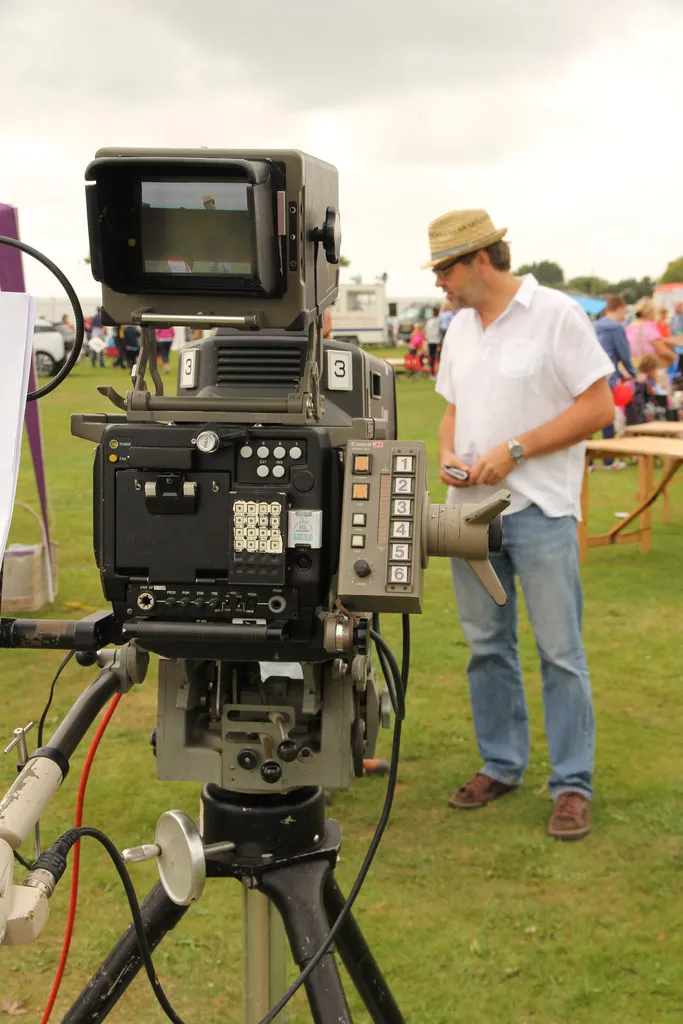
Photo: Richard Croft , CC BY-SA 2.0, via Wikimedia Commons
There is a fundamental asymmetry built into every photographic session. The subject faces forward, inhabiting their own experience from the inside out. The photographer stands apart, watching, measuring, waiting. One person lives the moment; the other records it. That distance—physical, emotional, and sometimes philosophical—is not a liability. It is the very source of photography's most enduring power.
Yet the implications of this asymmetry are rarely discussed with the candor they deserve. Clients hire photographers to document milestones, build brands, and preserve memories. What they seldom anticipate is that the photographer they bring into their world may ultimately see them more clearly than they see themselves.
The Outside Eye and Why It Matters
Human beings are notoriously poor observers of their own physical presence. Research in social psychology has long established that people perceive themselves through a filter of self-concept, expectation, and habit. We carry a mental image of how we appear that is shaped by mirrors, old photographs, and the stories we tell ourselves—none of which capture us in motion, in emotion, or in the unguarded moments that define authentic portraiture.
A photographer enters this landscape as a neutral witness. They have no investment in confirming the subject's self-image. They are trained to notice the slight forward lean that communicates genuine enthusiasm, the involuntary softening around the eyes that signals real laughter rather than performed cheerfulness, the way light catches a jawline at 4:47 in the afternoon that the subject has never once noticed about themselves.
This is not a trivial advantage. It is, in many respects, the entire argument for hiring a professional photographer rather than setting up a tripod and a timer.
When the Truth Arrives Uninvited
Consider a scenario familiar to many working photographers: a corporate headshot session for a mid-size firm in Chicago. The marketing director—polished, self-possessed, accustomed to being photographed—arrives with a precise idea of the image she wants to project. She has rehearsed her expression. She knows her angles.
The photographer, working through the formal poses efficiently, notices something during a between-shot pause. The executive has turned slightly to speak to an assistant, her guard completely lowered, her expression open and quietly authoritative in a way that her rehearsed smile never quite achieves. The photographer fires the shutter. The resulting frame is not what the client expected. It is considerably better.
This moment—replicated in studios and on location across the country every day—illustrates a pattern that experienced photographers recognize immediately. The images clients initially resist are often the images they eventually treasure most. The photograph that captures something true about a person will, given time, outlast any image that merely confirms what that person already believed about themselves.
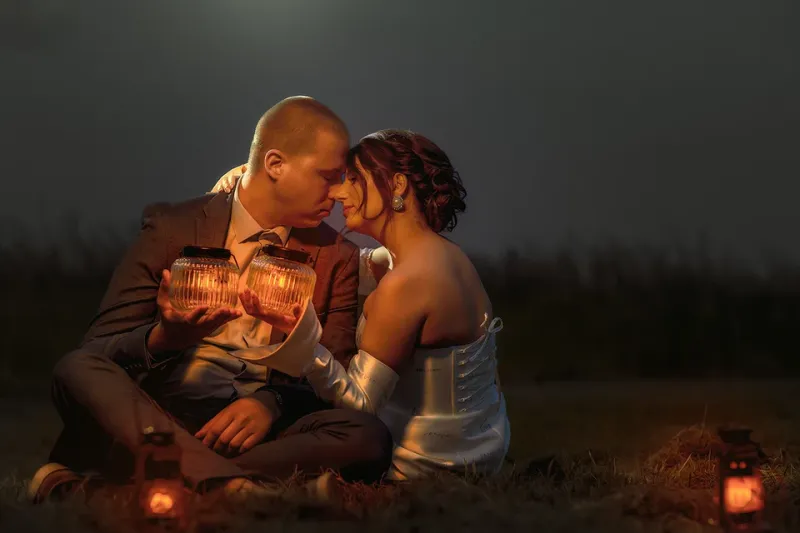
The resistance, when it comes, is understandable. Being seen clearly is not always comfortable. A wedding couple who imagined their first dance as effortlessly romantic may struggle initially with a photograph that shows them slightly off-balance, foreheads pressed together, laughing at a private stumble. Six years later, that image will be the one on the wall.
The Ethics of the Observational Advantage
The photographer's outsider vantage point carries responsibilities commensurate with its power. Seeing more than a subject sees is not a license to expose or diminish. It is an obligation to interpret with both honesty and care.
This distinction matters enormously in practice. There is a meaningful difference between a photograph that reveals an authentic dimension of a person's character and one that simply captures them at a disadvantage. The former serves the subject. The latter serves only the photographer's ego or, worse, a client's desire to control a narrative at someone else's expense.
Professional photographers navigating commercial work—brand campaigns, editorial portraits, event documentation—must hold this line with consistency. The observational privilege exists to illuminate, not to expose. Every frame that captures something unexpected should be evaluated through a dual lens: Does this image tell a true story? And does it tell that story with dignity?
For photographers working in portraiture, establishing trust before the session begins is the foundation on which this ethical practice rests. When subjects understand that the photographer's goal is authentic representation rather than flattery or critique, they tend to relax in ways that make genuine images possible. The conversation before the shutter opens shapes everything that follows.
Teaching Clients to Trust the Unfamiliar Frame
One of the more underappreciated skills in professional photography is the ability to guide clients toward images they did not know they wanted. This requires more than technical expertise. It requires the capacity to articulate why an unexpected photograph works—to translate the visual language of light, composition, and expression into terms that resonate with someone encountering the image for the first time.
Some photographers accomplish this through sequenced delivery: presenting the expected images first, building confidence, then introducing the more surprising frames once the client has established a baseline of satisfaction. Others open a dialogue during the shoot itself, narrating what they are observing in real time, so that the subject understands the photographer's intentions before the images are reviewed.
What does not work, in most professional contexts, is presenting an unexpected image without context and waiting for the client to catch up. The image that shows a CEO looking vulnerable and human rather than commanding and polished requires a frame—a brief explanation of what the photographer saw and why it matters. Given that context, the same client who might have dismissed the image outright will often pause, look again, and begin to see what the photographer saw.
The Deeper Argument for Distance
There is a reason that the most enduring portrait photographers—from Dorothea Lange to Annie Leibovitz to the contemporary editorial photographers reshaping American visual culture today—have consistently produced work that their subjects describe as revelatory. They were not simply skilled with light and composition, though they were certainly that. They were committed to the discipline of looking without assumption.
The viewfinder creates distance. Distance creates perspective. Perspective, wielded with intention and care, creates images that do something a mirror can never accomplish: they show us not how we appear to ourselves, but how we appear to the world, and occasionally, how we appear at our most genuinely, irreducibly human.
For photographers building a body of work and a client practice, this is the promise worth making: not that every image will be flattering, but that every image will be honest. And in the long arc of a client relationship, honesty is the more valuable currency.
The subject may not always see it at first. The photographer, standing behind the lens, already does.