Monday Spreadsheets, Saturday Shutters: Inside America's Weekend Photographer Boom
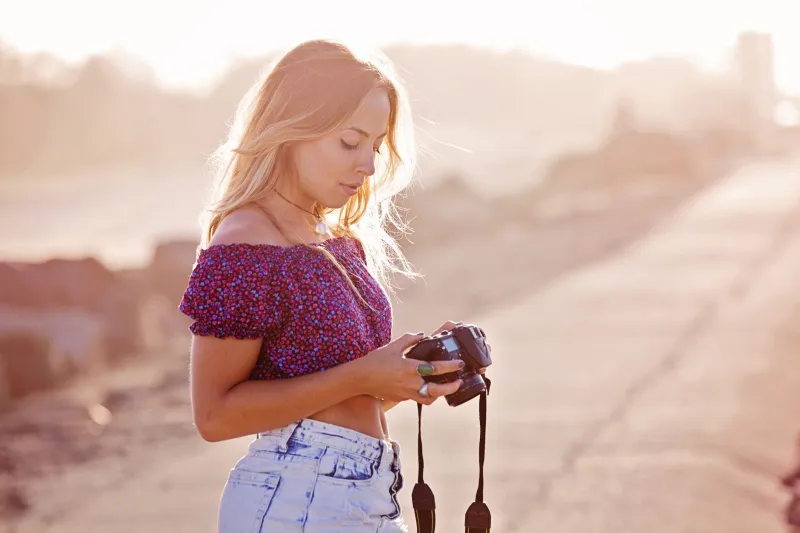
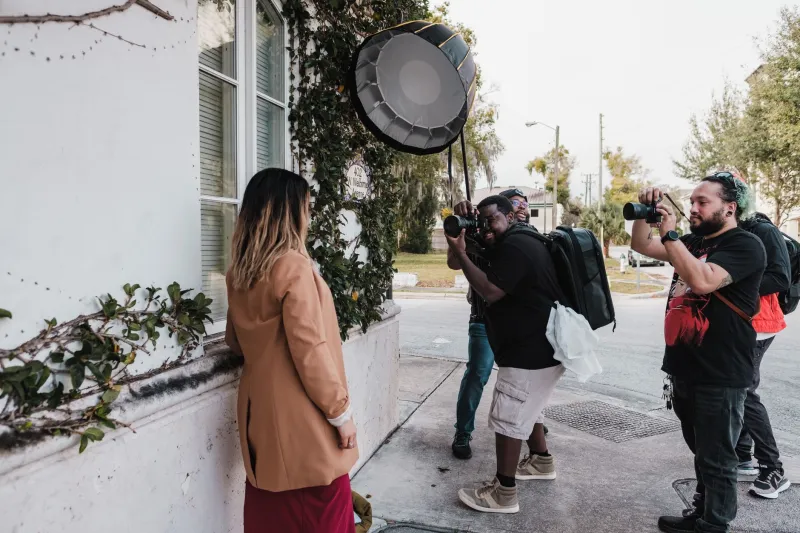
At 6:45 on a Saturday morning in Columbus, Ohio, an intensive care nurse named Dana kneels in dew-soaked grass at a county park, adjusting a reflector while a high school senior shifts self-consciously in front of the lens. Twelve hours later, she will review the contact sheet at her kitchen table, select thirty frames, and set an alarm for her Sunday shift. This is not her career. It is, increasingly, her life.
Dana is one of thousands of Americans who have folded photography into the margins of otherwise conventional working weeks — a cohort that industry observers have come to call the weekend photographers. Their day jobs span hospitals, classrooms, and accounting firms. Their calendars, however, tell a second story: engagement sessions on Friday evenings, quinceañeras and church homecomings on Sundays, and a steady drip of portrait bookings that fills the hours their professions leave behind.
The Numbers Behind the Impulse
The proliferation is not difficult to explain in material terms. Mirrorless camera bodies that once demanded a four-figure commitment can now be financed monthly. Editing software runs on the same laptop used for work email. Social platforms have collapsed the distance between a hobbyist's portfolio and a potential client's feed, turning what was once a gatekept profession into something closer to an open workshop.
But the economics only explain the means, not the motive. Interviews with part-time photographers across several states reveal a strikingly consistent vocabulary: burnout, control, making something. A middle school teacher in Kansas described photography as the only work she performs that produces an immediate, visible result. An accountant in the Atlanta suburbs spoke of spreadsheets all week and, in his words, "light all weekend." The camera, for many, functions less as a business plan than as a pressure valve — a place where their judgment still matters and the outcome belongs to them.
There is a structural element, too. American work has grown increasingly abstract, mediated by screens and measured in metrics few clients ever see. Photography offers the opposite: a discrete task, a defined audience, a finished object. It is the rare pursuit in which effort and evidence remain visibly connected.
What the Full-Timers Are Watching
For working photographers who depend on the craft for their livelihood, the influx is a complicated development. On one hand, an expanding pool of shooters has, in some markets, compressed prices for weddings and portrait sessions, undercutting rates that experienced professionals spent years establishing. A couple comparing quotes may not distinguish between a photographer with a decade of full weddings and one who shot their first three months ago — and the price gap can make the difference for them.
On the other hand, some established photographers credit the newcomers with expanding the market itself. Families who never would have budgeted for professional portraits at traditional rates will book a session at weekend-photographer prices, and some of those clients eventually trade up. The part-timers, several full-timers note, are also the industry's most enthusiastic consumers — of lenses, workshops, lighting equipment, and print labs. In a narrow sense, they are subsidizing the very market they are accused of destabilizing.
The more durable concern is qualitative. Photography as a discipline has always been learned through repetition and correction, and a shooter who books a dozen weddings a year on weekends simply accumulates fewer repetitions than one who shoots forty. Whether clients perceive that difference — and whether they should — remains an open question the market is still working out.
The Fragile Equilibrium
What emerges most clearly from conversations with this cohort is how carefully the balance must be managed. A nurse working three twelves cannot shoot a Sunday wedding and recover by Monday. Teachers arrive at their Saturday sessions already depleted by under-resourced classrooms. The photographers who sustain the practice longest tend to be those who treat it with a deliberate scarcity — limiting bookings, declining last-minute requests, protecting the creative energy the work requires rather than pretending it draws from an infinite well.
Some will eventually leap to full-time status, and a handful already have. Most, surveyed informally, say they do not want to. The day job, they insist, is not the obstacle to the photography; it is what makes the photography possible — the reason the camera remains a joy rather than an obligation. There is a certain wisdom in that arrangement, and perhaps a warning in it too. When the thing you love must also pay the mortgage, it changes. When it doesn't, it can remain what it has always been at its best: a way of paying attention, one Saturday at a time.
For the broader industry, the weekend photographers are neither saviors nor invaders. They are a mirror — reflecting a country of workers hungry for work that feels like their own. Whether the profession can absorb that hunger without losing its standards is the story the next decade will tell.