Playing Second Chair: The Veteran Wedding Photographers Clocking In for Someone Else
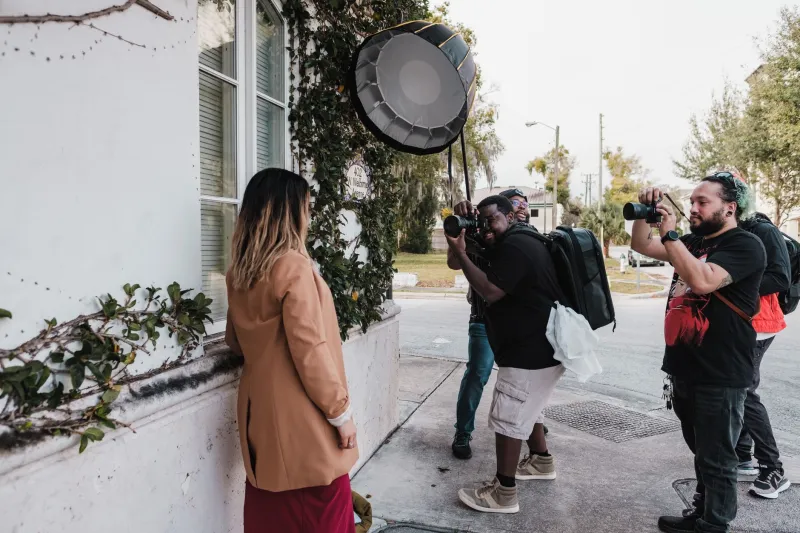
The email arrives in June, at the height of the season. A photographer with fifteen years of experience, a pricing guide that starts at four figures, and a calendar that once filled itself is asking a colleague a question that would have been unthinkable a decade ago: Do you need a second on the twenty-third?
It happens more often than anyone admits. In wedding photography circles — the Facebook groups, the Slack channels, the vendor mixers at banquet halls from Nashville to Portland — established shooters are trading their primary cameras for secondary roles, working under photographers they might once have considered peers or even competitors. They are not doing it for the money. The day rate is modest, the credit is invisible to couples, and the work is identical to what they do on their own bookings: hours on their feet, hundreds of frames, a family timeline that never quite holds.
So why are they doing it? The answer, according to a growing number of veterans, is that the second chair gives back something the first chair quietly took away.
The Weight Nobody Photographs
Running a wedding photography business in the United States has always been two jobs wearing one badge. There is the shooting — the getting-ready suite at 8 a.m., the first look, the reception dance floor at 10 p.m. — and then there is everything else: the inquiry emails, the contract revisions, the SEO audits, the Instagram reels, the pricing anxiety, the review requests. Veterans describe the administrative load as a second wedding that never ends.
"I got into this to make pictures," one Michigan-based photographer with over two hundred weddings to her name says. "Somewhere around year ten, I realized I was running a small company that occasionally let me hold a camera."
Burnout in the industry is well documented anecdotally, and the pandemic-era booking surge made it worse. Couples who postponed 2020 weddings collided with new 2021 and 2022 clients, compressing what would have been three seasons of work into one. Many photographers came out the other side with full calendars and empty tanks.
The second-shooter gig, oddly, has become a form of recovery. Under someone else's direction, the veteran is responsible for exactly one thing: making good photographs. No timeline to manage, no mother of the bride to reassure, no final gallery to deliver. The scope shrinks, and in the shrinking, something loosens.
What the Second Chair Teaches
There is also the matter of craft. Working alongside another photographer — particularly one younger or differently trained — exposes a veteran to approaches they would never have arrived at alone. A second shooter watches how a lead frames a first dance, how they handle a difficult officiant, how they position themselves during the processional. It is an apprenticeship in reverse.
"Every time I second, I steal something," a Texas photographer who books associate work between his own weddings admits. "A lens choice, a way of talking to a DJ, a trick for the family formals. Fifteen years in, I'm still taking notes."
Humility is part of the curriculum too. The veteran who has delivered hundreds of galleries must now take direction, shoot to someone else's brief, and crop to someone else's vision. Photographers describe the initial discomfort — and then the unexpected pleasure — of surrendering authorship for a day. Without the pressure of being the final word, experimentation becomes safe. The second shooter can try the risky angle, the unfamiliar lens, the dramatic flash setup, because nothing rests on their shoulders alone.
A Quiet Support Network
The pattern has produced an unadvertised benefit: a professional web that holds the industry together during its most brutal months. Lead photographers who once struggled to find reliable second shooters now have a bench of experienced, low-drama colleagues who genuinely want the work. Veterans get flexible days that fit around their own bookings. Studios get extra coverage they can trust. And when a lead falls ill or a double-booking collapses, the network — built one second-shooter gig at a time — is often the reason a couple never knows anything went wrong.
Some in the industry see this as a maturation. Wedding photography spent two decades building personal brands, each photographer an island with their own logo and hashtag. The return of the veteran second shooter suggests a counter-movement: a recognition that the work is better, and the people in it healthier, when the profession resembles a guild rather than a million solo acts.
The Frame Comes First
None of this is a rejection of the primary business. Most of these photographers still book their own weddings and still love their own clients. But the second-shooter day has become something like a photographer's version of a musician sitting in with another band — a reminder of why the instrument mattered before it became an enterprise.
"I show up, someone hands me a shot list, and for ten hours my whole job is light and timing," the Michigan photographer says. "I go home tired in the way I was tired in year two. It's the only wedding day all month where I remember why I started."
In an industry obsessed with being seen — with the hero shot, the featured gallery, the viral reel — the veteran second shooter has chosen the opposite: presence without credit, craft without overhead. It may be the most quietly sustainable trend in American wedding photography, and almost no couple will ever know it happened.