Reading the Land: When American Geography Becomes the Story Itself
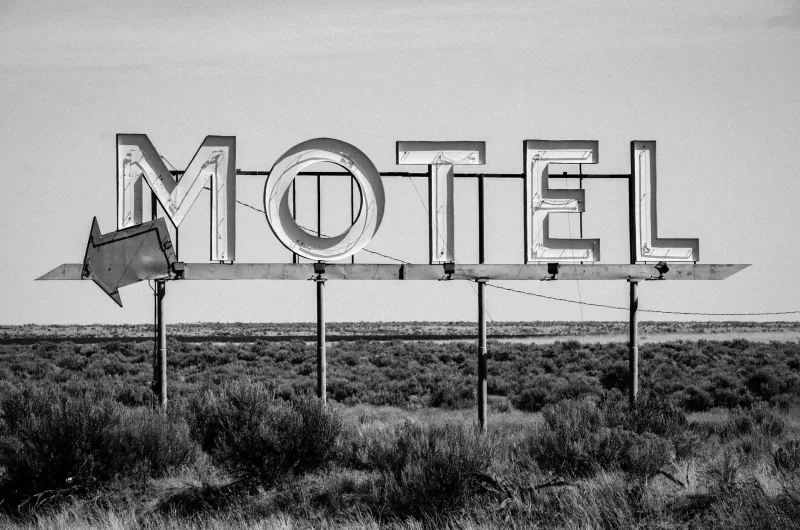
Every photograph is a collaboration, but some of the most committed partners never sign a release. They are the cracked stucco of a Route 66 motel, the fog rolling into a Maine harbor at dawn, the sodium glow of a Rust Belt main street at dusk. For a growing number of American photographers, place is not a setting. It is a character — with moods, a voice, and a story arc all its own.
Casting the Landscape
Ask a place-driven photographer how a project begins, and the answer often sounds less like an artist and more like a casting director. Marissa Hale, a documentary photographer based in Albuquerque, describes her process in explicitly theatrical terms. "I read a location the way a director reads a script," she says. "The desert outside Santa Fe doesn't just look a certain way. It behaves a certain way. The light is harsh by ten in the morning and forgiving by six. If I want tenderness in a frame, I have to schedule around the desert's temperament, not mine."
This kind of literacy — knowing how a place acts at different hours, in different seasons, under different weather — separates location photography from location logistics. Anyone can find a scenic overlook. The craft lies in understanding what that overlook means, and what it will mean to a viewer who has never stood there.
The Grammar of American Light
The United States offers something few countries can: staggering regional variety compressed into a single visual language. The low, raking light of a Vermont October reads as elegy. The flat, blazing noon of West Texas reads as confrontation. The marine layer of Northern California softens everything it touches, lending even a hardware store a kind of melancholy dignity.
Photographers who work across regions learn to adjust not just their exposure but their expectations. Portland-based editorial shooter Daniel Okafor recalls a corporate assignment that took him from his hometown to rural Mississippi. "I arrived with my Pacific Northwest habits — overcast, diffuse, everything muted," he says. "Mississippi in July handed me hard edges and saturated color whether I liked it or not. Once I stopped fighting the light and let it dictate the mood, the whole series clicked. The place was telling me what kind of story it wanted."
Architecture as Autobiography
Buildings may be the most articulate characters of all. A shuttered diner along Interstate 40 communicates decades of economic shift without a caption. A restored brownstone in Brooklyn, a grain elevator in Kansas, a pastel cottage in Key West — each is a self-portrait drawn by a community.
Photographers skilled at place-based work learn to read these structures for their accumulating details: the layering of signage, the patina of paint, the way a porch sags toward the street it used to watch. These are not accidents. They are evidence. And evidence is the raw material of narrative.
The practical implication is that great location photographers are often great loiterers. They revisit. They return at the wrong hour on purpose. They photograph the same corner in February and again in September, waiting for the building and the light to agree on a story.
Scouting Like a Professional
For photographers looking to deepen their relationship with place, working professionals offer consistent advice:
- Visit before you shoot. A scouting trip without a camera — or with only a phone — frees you to observe rather than compose. Note where the sun rises and sets relative to your subject, and what the location sounds like, since sound often shapes how long a subject will tolerate your presence.
- Check permits early. Many national parks, state beaches, and municipal landmarks require commercial photography permits, and processing times vary widely. Some cities, including Los Angeles and Chicago, offer streamlined online systems; rural jurisdictions may require weeks of phone calls.
- Talk to locals. A diner server or hardware store clerk will tell you when the fog burns off, when the tourist buses arrive, and which side of town your car should not be parked in after dark. No guidebook matches this intelligence.
- Embrace the ordinary. The extraordinary image of an ordinary place often outperforms the ordinary image of an extraordinary place. Your hometown, however unremarkable it feels, is someone else's postcard fantasy — and its familiarity is a compositional advantage you will never have anywhere else.
The Familiar Made Strange
That last point deserves emphasis. Perhaps the most accessible frontier in place-based photography is the ground already beneath your feet. Photographers who commit to documenting a single zip code — over a year, over a decade — frequently produce the most resonant work of their careers, precisely because proximity grants them access and patience that visiting artists cannot buy.
The land, in the end, is a patient collaborator. It will hold its expression as long as you need. The work of the photographer is simply to listen long enough to hear what it has been saying all along — and then, with one frame, to repeat it clearly enough that a stranger a thousand miles away can feel it too.