The Discard Pile's Quiet Revenge: How Time Rewrites a Photographer's Judgment
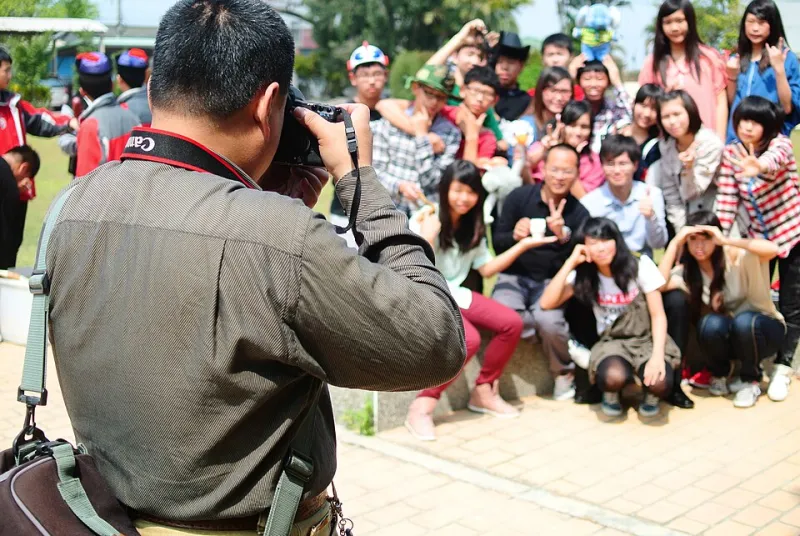
Photo: 褒忠國中 雲端網, CC BY 2.0, via Wikimedia Commons
Every working photographer in America owns a version of the same folder. It goes by different names — Rejects, Outtakes, the blunt and unforgiving Trash — but its function is identical. It is where instinct sends images the moment the shutter closes: the blurred street corner in Albuquerque, the half-lit portrait where the subject turned away, the overexposed skyline that didn't match the picture in the photographer's head.
And yet, ask any seasoned professional about their favorite work, and a curious pattern emerges. A striking number of them point to images that once lived in that folder. The photograph they almost deleted became the photograph they couldn't stop looking at.
The Verdict We Hand Down Too Quickly
There is a particular kind of certainty that arrives in the first thirty seconds after capturing an image. On the back of the camera, in the glow of the review screen, judgment is swift. Sharp or soft. Composed or cluttered. What we expected or what we didn't. Photographers are trained to edit ruthlessly in the field, and that discipline has real value — but it also has a cost.
The problem is that instant judgment measures an image against intention, not against merit. A frame that deviates from the plan gets penalized for its deviation, regardless of what it actually contains. The blur that reads as failure on a three-inch LCD screen may, on reflection, carry more energy and honesty than the technically perfect frame beside it.
Marcus Whitfield, a documentary photographer based in Portland, Oregon, describes the phenomenon plainly. "I shot a series at a county fair a few years back. There was one frame — motion blur, ferris wheel lights smeared across a kid's face — that I marked for deletion before I even left the fairgrounds. Eight months later, going through the drive for something else, I stopped on it. It was the only image from that day that felt like the fair actually felt."
What Time Does to an Image
The explanation for this reversal isn't mystical. It is, in large part, a matter of what psychologists call distance — the separation between the maker and the moment of making.
When photographers review work immediately, they are not really looking at the photograph. They are looking at the memory of taking it: the cold, the crowd, the conversation that distracted them, the shot they meant to get. All of that context crowds the frame. Months later, the context evaporates. Only the image remains, and it can finally be judged on its own terms.
Editors understand this better than anyone. Photo editors at magazines and newspapers have long built delay into their workflow for precisely this reason. A common practice in editorial circles is to avoid selecting images on the same day they were shot, because the editor's memory of the assignment is still doing the looking. Give it a week, and the pictures start speaking for themselves.
There is a second force at work, too: taste. A photographer's eye is not a fixed instrument. It shifts with every book studied, every gallery visited, every year spent looking. The unconventional frame that clashed with your sensibilities in March may align perfectly with them by October. The discard pile, in this sense, functions as a letter from your past self to your future one.
The Mistake That Becomes a Signature
Some of photography's most celebrated qualities — grain, blur, flare, tilt, accident — were once considered defects. The history of the medium is, in part, a history of errors being promoted to aesthetics. What reads as a flaw in one era or one mood becomes a visual language in the next.
This is why the second look matters so much. The frame you almost deleted often fails in a way your trained instincts disapprove of but your deeper instincts respond to. It breaks the pattern. It resists the formula. And work that resists formula is frequently the work that endures.
Consider how this plays out in practice. Wedding photographers routinely report that their most requested images — the ones clients frame and hang — are not the meticulously arranged formals but the chaotic in-between frames: the motion, the laughter caught mid-collapse, the aunt walking through the shot. Those images were frequently the ones the photographer flagged as unusable at first review.
What Amateurs Can Steal From the Pros
For the everyday photographer — the parent with a mirrorless camera, the traveler with a phone full of near-misses — the lesson is both simple and counterintuitive: institutionalize the second look.
A few practices worth adopting:
- Delay the delete. Never remove images on the day you shot them. Wait at least a week before making final judgments.
- Keep a resurrection folder. Move rejected frames into a separate collection rather than the trash. Revisit it quarterly.
- Judge without the memory. When reviewing old work, cover the file dates if you have to. Look at the picture, not the story of taking it.
- Watch for the frames that make you uncomfortable. Discomfort often signals that an image is challenging your assumptions rather than confirming them.
None of this means every rejected frame is a hidden masterpiece. Most outtakes are outtakes for good reason. But the ratio is better than instinct suggests, and the cost of a second look is nothing more than a few minutes of scrolling.
Learning to Distrust Your First Answer
The deeper lesson here extends past photography into any creative discipline: first judgments are made by the version of you that was tired, rushed, and attached to a plan. Later judgments are made by someone freer.
The photographers who consistently produce memorable work are not necessarily the ones with the sharpest instincts in the field. They are the ones who have learned to hold their own verdicts loosely — to treat the discard pile not as a graveyard but as a holding cell, full of images awaiting a fairer trial.
So before you empty the trash, pause. The photograph you almost deleted may simply be ahead of you — waiting, patiently, for you to catch up to what it already knows.