Rooted in Place: Five American Towns Where the Light Does the Recruiting
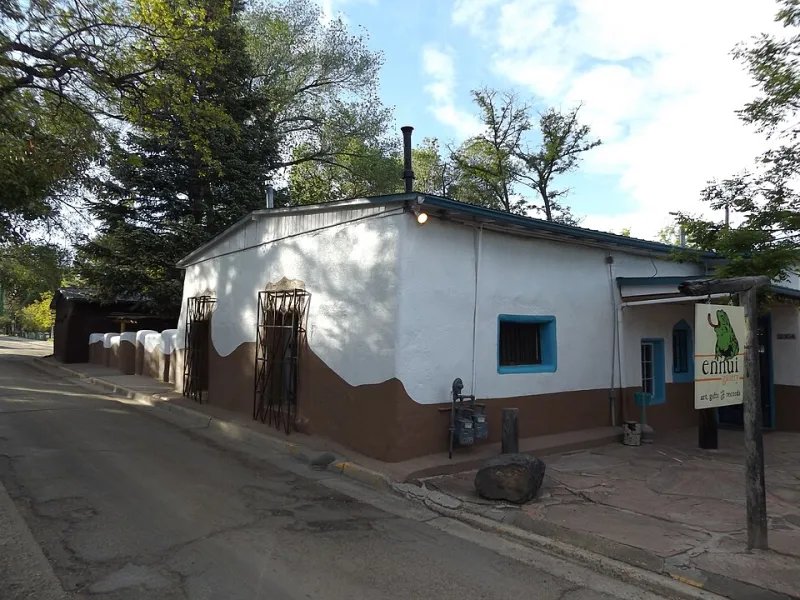
Photo: Doug Kerr, CC BY-SA 2.0, via Wikimedia Commons
The standard advice given to emerging photographers is to go where the work is. But a quieter counter-tradition runs through American photography: artists who chose a place first and built everything else around it. In an era when anyone can shoot anywhere, these photographers argue that depth of place beats breadth of travel. Here are five towns where that argument is being won.
Taos, New Mexico
The high desert light of northern New Mexico has drawn artists for over a century, and Taos remains its epicenter. At 7,000 feet, the light is thin, sharp, and unforgiving at noon but transforms into something molten in the final hour before sunset. Resident photographers here speak of adobe walls as natural reflectors and of winter light so clean it seems borrowed from another planet. The lesson for newcomers: extreme light rewards patience. The photographers who thrive in Taos are the ones willing to wait out the harsh middle of the day.
Rockport, Maine
On Penobscot Bay, fog is not weather — it is a medium. Rockport's harbor photographers have built entire bodies of work inside gray atmospherics that would send most shooters home. Lobster boats dissolve into silhouettes; buoy colors mute to pastels. Working here teaches a skill that sunny locales never will: composition without contrast, mood without color. Fog forces form to do all the work.
Bisbee, Arizona
A former copper mining town turned artist colony an hour from the Mexican border, Bisbee offers layered textures — corrugated tin, Victorian facades, staircases climbing canyon walls. The photographers who settled here learned that character accumulates in surfaces. Bisbee's lesson is about patina: places that show their age photograph honestly, and photographers who embrace decay rather than avoid it develop a signature faster.
Marfa, West Texas
Famous for minimalist art installations and an otherworldly high-desert emptiness, Marfa attracts photographers interested in negative space. The town's flat horizon lines and vast skies teach a discipline of subtraction — what can be removed from the frame until only the essential remains. Resident image-makers here often describe their careers as exercises in restraint.
Beaufort, South Carolina
Spanish moss, tidal marshes, and antebellum architecture give Beaufort a visual register distinct from anywhere else in the South. The photographers who built studios here learned to work with humidity's haze and the deep greens of Lowcountry light. The town rewards photographers who study subtlety — gradations of green, the soft geometry of marsh grass.
What Staying Put Teaches
The common thread among all five is intimacy. A photographer who shoots the same harbor, desert, or marsh for years develops a knowledge no visitor can match — when the fog burns off, where the light lands in October, which wall glows at 6 p.m. in winter. Place, it turns out, is not a limitation on a career. Done seriously, it is the style itself.